


April 1, 2026
By Allison Strochlic
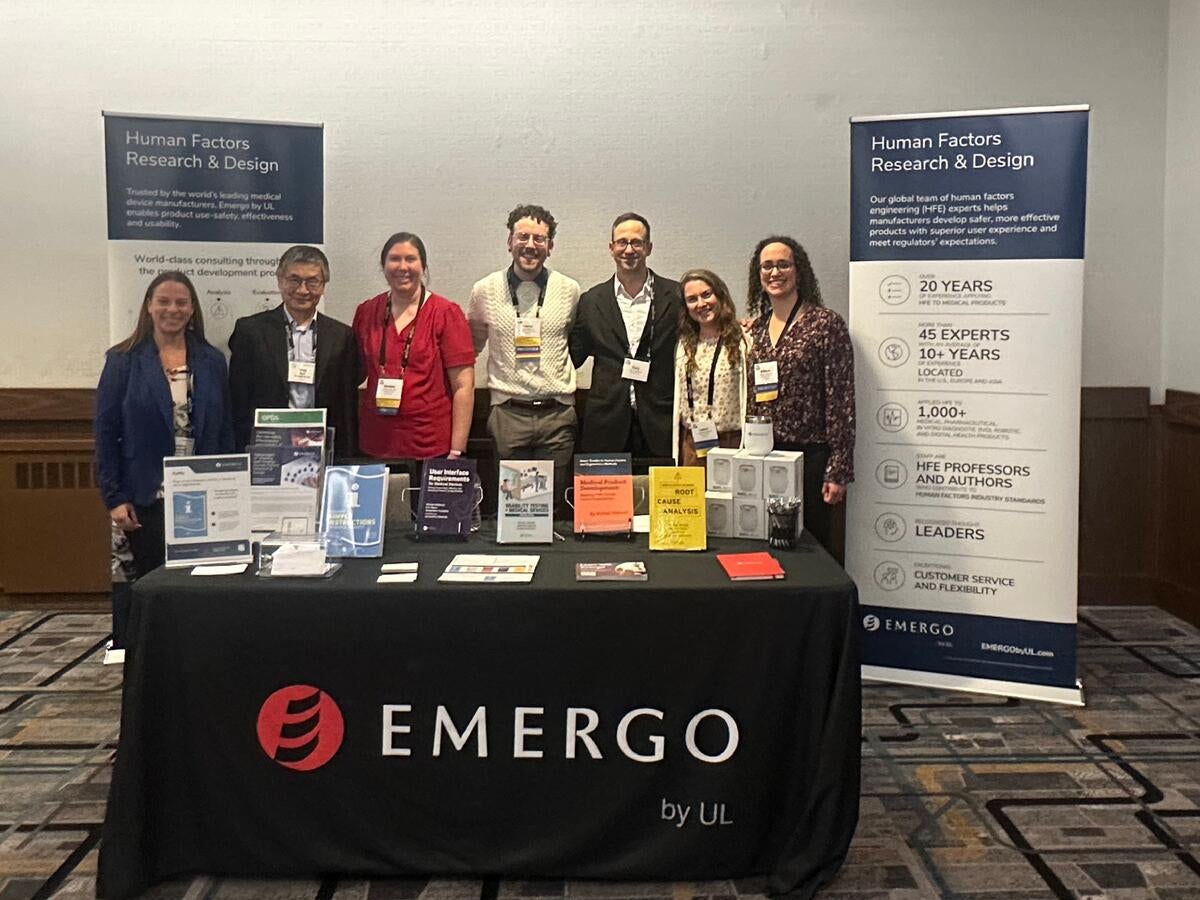
The 2026 Human Factors & Ergonomics Society Health Care Symposium brought us to New York City, where we participated in the Robotics Summit and the 2.5-day “main event” that followed. Below, we share five of our key highlights from our favorite professional event of the year.
Robotics – calling all clinicians, manufacturers, and consultants
The 3rd annual Robotics Summit, scheduled to precede the Health Care Symposium, attracted a multi-disciplinary group of 80 professionals eager to see continued advancement in the application of Human Factors Engineering (HFE) to robotic-assisted surgical (RAS) technologies. The full-day event covered trends in FDA feedback and fostered many engaging conversations regarding the barriers between academic research, system design and manufacturing, including conflicting priorities between advancing patient care and “red tape” that can limit the pace of innovation. Our contributions included Merrick Kossack’s, Laura Birmingham’s and Layne Hartman’s two presentations, covering (1) identifying when intended users’ specialization warrants distinct user groups, and (2) tips for conducting effective usability tests with surgical teams.
Opening plenary panel featuring hospital-embedded HFEs
The official Symposium kicked off with its first-ever panel-style plenary address titled “A View from the Inside: Challenges and Opportunities for Embedded Healthcare HF Professionals.” Five leaders representing different hospital systems shared their experiences and challenges working in a large and heavily interconnected clinical environment. They described the wide variety of tasks they manage, how to establish relationships and build trust with clinicians and administrators, and how to apply HFE in a way that builds credibility and supports clinicians and patients to optimize their workflow and experiences. The panel provided great insights into the day-to-day challenges and opportunities for HFEs in clinical settings and reinforced the value that HFEs bring to healthcare delivery, impacting clinicians’ – as well as patients’ – experiences and outcomes.
The ups and downs of HFE and Artificial Intelligence (AI)
Again this year, AI continued to be a key area of discussion. In comparison to previous years, presenters and attendees expressed more of a “love-hate” rather than “wow, amazing” relationship with AI, approaching the topic with cautious optimism. Artificial intelligence still seemed to be a valuable tool to perform preliminary analyses of large data sets – for example, using AI to help scour through thousands of reported adverse events available in the MAUDE database (to be consolidated into FDA’s Adverse Event Monitoring System later in 2026). That said, practitioners acknowledged that leveraging AI for other data, such as those generated via user research and usability testing, can lead to “losing intimacy” with not just the data but also with understanding users and accurately identifying key themes and trends, which still requires a human touch. While researchers are eager to leverage AI to streamline rote activities, AI is still falling short when it comes to generating key technical documentation, including protocols and reports. That’s good news in our view! We love a good efficiency hack, but we are not looking to distance ourselves too much from the data we generate, the users we interact with and how we apply our findings to optimize products in development.
Continued advancements in all things digital
In line with the digitization of our world, the HFE community continues to adapt to healthcare’s technological shift. This went beyond past presentations about the FDA’s developing regulations around software as a medical device (SaMD). This year’s presenters delved into nuances around SaMD evaluation methodology and digital design practices for mobile applications. Manufacturers also forecasted how digital labeling (e.g., eIFUs, video tutorials) will impact future product development and the regulatory landscape. Our team’s Cory Costantino expanded the conversation with a presentation on how personalization within digital applications can address common human factors challenges of access, motivation, and social support, in addition to features related to the specific medical indication.
Some “core” standby topics still evolving and warranting discussion
In addition to a number of new and novel presentations, we continued to see some of the core topics of applying HFE in the healthcare domain reprise their role as central themes. One recurring topic included best practices and nuances around HFE risk management, with discussions covering use-related risk analyses, and which function within an organization is ultimately responsible for a strong residual risk analysis conclusion (hint: NOT HFE!). Practitioners also continued to share best practices regarding recruiting and conducting usability testing with rare user populations and clinical teams, evaluating self-selection of over-the-counter products and calculating the ever-elusive “d value” required for comparative use human factors studies of proposed generic combination products. Emergo’s Emilee Stanczyk and Elliot Shin presented on special considerations for conducting usability testing with individuals with cognitive impairments, such as those associated with Parkinson’s Disease, Alzheimer’s, and other conditions.
Conclusion
While not reflected in our “Top Five” above, interpreting and keeping up with the FDA’s evolving expectations for applying HFE during medical technology development remained at top of mind. Several presentations addressed key nuances across various topics, and to wrap it all up, our team’s Allison Strochlic co-led a panel of leaders from HFE consultancies who came together to share and reflect on observed trends in FDA feedback over the past year.
Attending the Symposium, seeing colleagues and customers, and learning from the broader HFE community is always an energizing experience. The event reinforced our shared eagerness to collaborate – drawing upon individuals’ and organizations’ key strengths – to positively impact patient safety and medical device usability and use-safety. Reach out to see how we can bring our knowledge, experience and enthusiasm to support your HFE efforts and help you bring safe, effective, user-centered medical products to market.
Allison Strochlic is Senior Research Director at Emergo by UL.


Request more information from our specialists
Thanks for your interest in our products and services. Let's collect some information so we can connect you with the right person.